Portfolio
Shipped. Live. Serving users.
Every project here is a real product, not a demo. Live users, real data, production infrastructure.

TheMarketBug
Financial data platform with custom charting, congressional trading, and SEC tracking.
Challenge
Financial data is messy. Multiple APIs return different formats, different timestamps, different precision. Existing charting libraries couldn't render real-time candlestick data at the speed and granularity required — they'd choke on the update frequency or produce visual artifacts during rapid redraws. On top of that, congressional trading data comes from scattered government filings that need to be parsed, normalized, and cross-referenced with live market data to be useful.
Solution
Built a custom charting engine from scratch using Canvas API for sub-second candlestick rendering with zero visual artifacts. Designed a normalization pipeline that ingests disparate financial data sources and unifies them into a single format with consistent timestamps and precision. Congressional trading and SEC filing data flows through a dedicated parser that cross-references holdings with real-time price data automatically.
CodingBugLabs
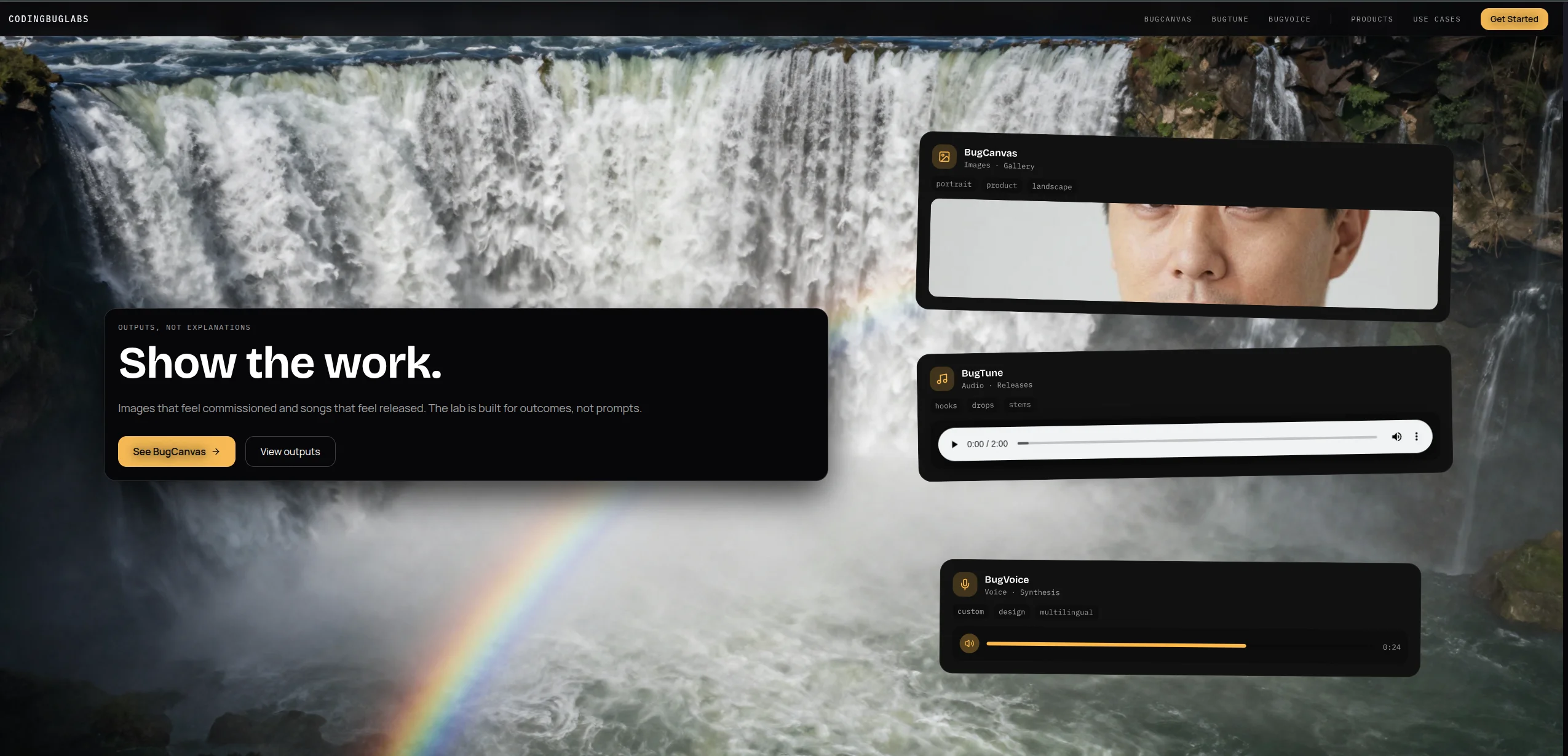
AI-powered creative platform for generating images, music, and audio.
Challenge
Generative AI models are resource-intensive and slow. Each modality — image, music, audio — has different processing requirements, different latency profiles, and different output formats. Existing solutions dump users into raw model interfaces with no iteration workflow, no output management, and no way to manage GPU costs at scale. The UX challenge was making three fundamentally different ML pipelines feel like one cohesive product.
Solution
Built an abstraction layer that normalizes the generation workflow across all three modalities — same input patterns, same iteration flow, same output management. Implemented a job queue system with real-time progress tracking and preview generation so users get immediate feedback during the 10-60 second generation window. Resource allocation dynamically routes workloads to available GPU capacity to minimize cost and maximize throughput.
Email Tracker
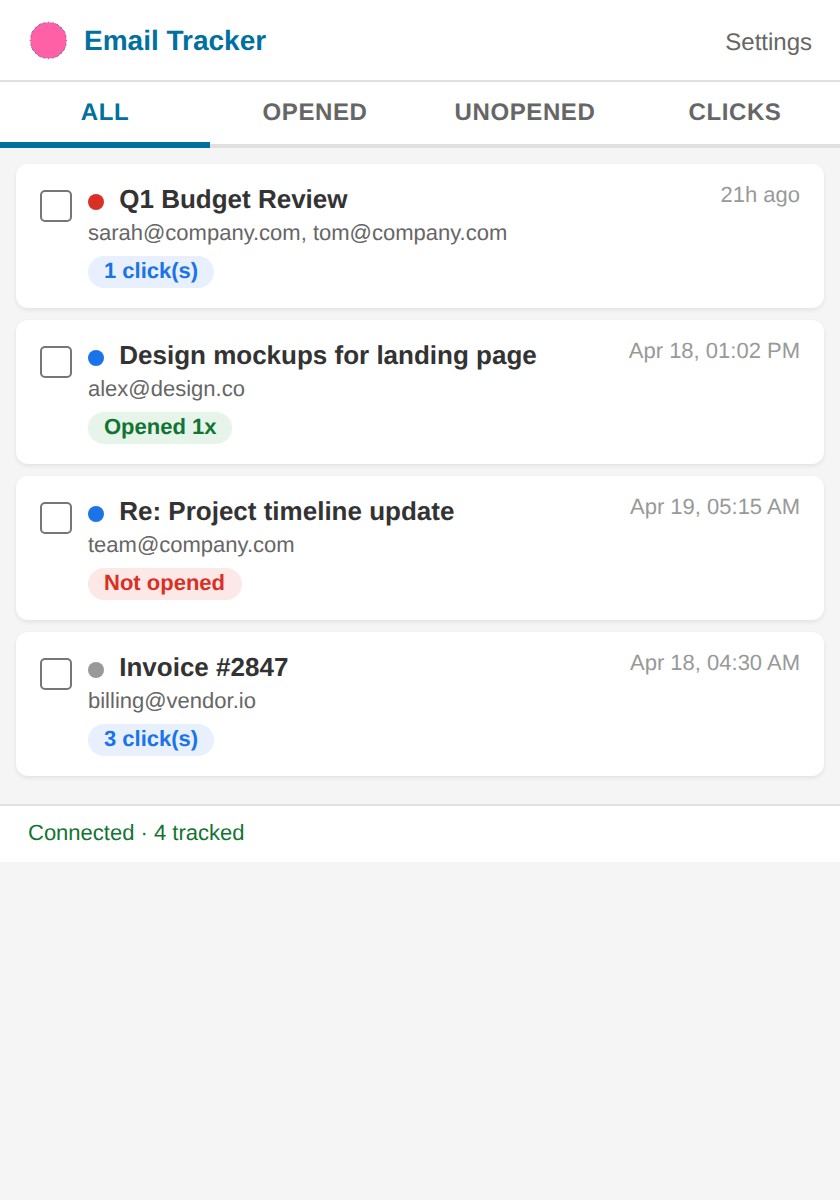
Self-hosted Chrome extension for email open/click tracking and inbound tracker blocking.
Challenge
The most popular email tracking extensions for Gmail handle sensitive authentication data and email content. After auditing one with over a million users, I found it was capturing auth tokens, running eval() on remote code, stripping content security policies, and requesting permissions far beyond what was needed. Every alternative had the same problem — your email data flows through their servers, and you have no control over what they do with it.
Solution
Built a fully self-hosted alternative where the only data that leaves Gmail is a pixel load request and an API call to your own server. The Chrome extension uses Manifest V3 with minimal permissions, no remote code loading, and no eval(). The backend runs on a personal server with API key auth, SQLite storage, and nginx reverse proxy. Gmail's image proxy was a significant technical challenge — it caches pixels after the first load, so link click tracking was implemented as a more reliable fallback that captures real device and location data. The inbound tracker blocker uses declarativeNetRequest to block 30+ known tracking services without intercepting page content.
Want something built?
Every project above was built from scratch — no templates, no shortcuts. If you need a platform for your audience, let's talk.